• Skip to main content
  • Skip to main content
Choose which site to search.
University of Arkansas for Medical Sciences Logo University of Arkansas for Medical Sciences
Students: Educational and Student Success Center
  • UAMS Health
  • Jobs
  • Giving
  • Student Success Center
  • About Us
    • FAQs
      • Academic Coaching FAQ
      • Peer Tutoring FAQs
      • Presentation Center FAQs
      • Tech Center FAQs
      • Writing Center FAQs
    • Hours
      • Holiday Hours
  • Student Services
    • Learning Services
      • Academic Coaching
      • Peer Tutoring
        • Benefits of Peer Tutoring
        • Peer Tutoring Request
    • Tech Center
      • Laptop Lending Policy
    • Writing Center
  • Resources for Students
    • Content Support
    • ESSC Video Resources
    • Learning Support
    • Tech Support
      • Blackboard – How To
      • Blackboard App – How to
      • How do I connect to UAMS Wi-Fi on my mobile device?
      • How do i get email on my mobile device?
      • How to setup my UAMS Zoom account?
      • Respondus Lockdown Browser – How To
      • Software recommendations
    • Writing Support
  • Student Success Blog
  • Request Help
    • Get Help with Your Classes
    • Get help with your laptop or mobile device
      • Request to use a laptop
    • Give Feedback on a Tutoring Session
    • Peer Tutors – Submit a session timesheet
    • Submit your document to the Writing Center
      • Reserve the Presentation Center
  • Quick Links
  • Faculty & Staff
  1. University of Arkansas for Medical Sciences
  2. Students
  3. Educational and Student Success Center
  4. study skills

study skills

Studying for the USMLE Step 1: Schedule Your Training for the Big Event

Athletes, especially ones who have never run a marathon, will create a training schedule to prepare them for the big event. This schedule does not mean that they run the full marathon every week training, but rather they train in shorter intervals that will gradually increase in difficulty up until the actual event. Creating a study schedule for Step 1 is similar and also as vitally important to success.
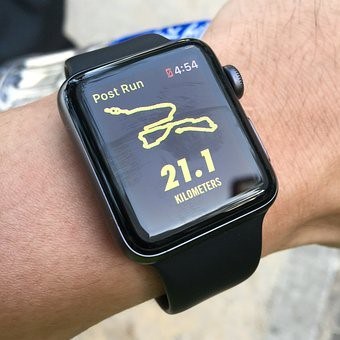
smart watch displaying workout on a person's arm

For students at UAMS, I like to think that there are three distinct study periods: the Pre-Capstone Block (from now until the capstone course), the Capstone Block (during the capstone course) and the Dedicated block. The last of these is what students formally think of as the time when nothing else is going on except for focused study for Step 1, but the time periods leading up to this can also be important.

The universal advice I give is this: It is important to create a schedule early and have plenty of time to “perfect” it before actually starting dedicated study period. You can use these other time periods to try out what following a schedule would be like and at the same time cover your most difficult material from the first two years. The important thing is, by the time the dedicated study period rolls around, your schedule should be polished and ready to go. You have been training for the big event up until this point, and you are confident about what you will be doing in these last weeks.

There are a few methods to create a schedule. Using a Word or Excel document is a valid strategy that many use. There are many old schedules passed down from more senior students, and it is definitely a cheaper way to go. I prefer using schedule-creating programs CramFighter or Osmosis if your budget allows. CramFighter is particularly useful and easy since it allows you to simply plug in all of your material that you want to cover, then it evenly distributes it throughout the allotted study period. If you miss a day, or some material on a day, instead of having to reinvent the wheel, all you have to do is “recalculate”.

(Disclaimer: I do not work in sales for CramFighter, I just have the most experience with it.)

Try to think of material that you want to cover in “passes”. Your first pass is when you cover it in class and your second pass will be when you cover it during your dedicated study period. These Pre-Capstone and Capstone Blocks can help you get a third pass in for material that is pretty rusty or you feel you didn’t learn well the first time through.

Additionally, you can try to get as much of a first pass on UWorld as you can before your dedicated block. Think of it as training for a marathon. You may run a few miles a few times a week at first, but by the end you are running about twenty miles a week. Doing practice questions is similar: Try blocks of twenty, random and untimed at first to get used to them. By the time dedicated studying rolls around, you’ll be cranking out timed blocks of forty random questions like it’s nothing!

Just remember, it’s a marathon and not a sprint. It’s important to plan ahead and create a schedule for the main event. So what are you waiting for? Get to work on that first draft of your schedule!

Ryan Oliver COM4 Student, Contributing Author

Filed Under: study skills, test preparation

Don’t Sprint the USMLE Step 1

What exactly am I training myself for?

It’s January of your M2 year. The first semester flew by almost as fast as Christmas break did, and you’re approaching the halfway point in your medical school career. In the back of your mind you may have been thinking about it as the test-that-shall-not-be-named (cue dramatic music here), but it’s now time to start openly thinking about the USMLE Step 1. It’s a marathon and not a sprint; it’s time to begin training.

The intention of this post is to help you begin planning and preparing to tackle this milestone in your education by understanding what your objectives are. Studying for Step 1 truly is a marathon and not a sprint. Success is more easily achieved by making a training schedule in advance, identifying weaknesses and preparing at a pace that allows you to be in a healthy place for the main event.

Preparing for Step 1 is largely about two things: Content review and answering board-style questions.

1. Content Review: Understand that not all content taught in modules is relevant to the exam, and not all content relevant to the exam is taught in class modules. Therefore, it is important to use resources that cover this content both completely and concisely as possible. Your first step should be identifying which review materials work best for you (not your friends; you!).

Below are some helpful resources; my list is suggestive and not comprehensive. The idea is to pick ones that help you keep content in long-term memory. It should also cover testable content as much as possible without getting into the weeds, so to speak.

                           A.    Knowledge Banks: These are places where large volumes of medical                                         content specifically related to USMLE Step exams are stored, and very                                       helpful organizing and referring to facts and medical knowledge                                               Examples: First Aid for the USMLE Step 1, MedBullets, AMBOSS

                           B.    Video Series: These are resources where the concepts of content are                                       explained, and additionally help keep you feeling more sane than trying to                               read textbooks.                                                                                                                                Examples: Pathoma, Boards and Beyond, Osmosis

                           C. Picture-Style Resources: These are popular resources that help provide                                   long-term memory hooks for facts that are unintuitive and seem esoteric.                               Examples: SketchyMedical (Pathology, Microbiology and Pharmacology),                                   Picmonic

2.  Answering Board-Style Questions: Learning how to tackle these questions takes a lot of repetition and practice. It is helpful to think of this as a skill separate from actually knowing the content itself.

Module NBMEs and the Basic Science NBME taken in January do not directly predict if you will pass Step 1, but they do inform you of your skills in answering board-style questions. This information is very important. Sometimes all of the content review in the world is not going to help unless you know how to tackle these often multi-step, multi-layered vignettes.

My first piece of advice is that if you feel that you have a history of consistently not being able to perform what you consider well on past exams with board-style questions, you are not alone. The most important thing to do is to ask for help early, and be persistent about finding someone to help you learn to answer these questions. Practicing questions and figuring out why you are answering them incorrectly is the goal here.

So, the next question is, how do we train such a specific skill? The answer is: Question banks.

Step 1 is just a series of blocks of questions full of random content to be worked out on a time schedule. The more often you do this, the better you will be at it. Generally, I advise doing small blocks, untimed and random early on in the spring of M2 year on a regular basis. This should be something not too strenuous to cause problems with learning class content. The intensity can be ramped up slowly as you approach your dedicated study period, where you then should be treating every block like it is a block on the exam.

I hope this helped you to understand exactly what skills you are training when studying for Step 1. Please keep an eye out for future blogs that will be discussion creating schedules and test-taking hygiene, both of which are important when preparing for Step 1.  Remember it’s a marathon and not a sprint.

Ryan Oliver COM4 Student, Contributing Author

Filed Under: study skills, test preparation

The Study Schedule: Your Plan to Defeat Procrastination

We have arrived at that point in the semester when students are looking stressed, and are scrambling to catch up with their workload. Many find themselves losing the battle with procrastination, and end up cramming right before an important exam. Their performance is off, and they can’t catch  their breath.

Create a Study Schedule

Creating and sticking to a study schedule is easy to do and will help you win your battle against procrastination. Your schedule will help you stay on top of your work, rather than having to drop everything to study for an exam. It will help reduce your stress and improve your long-term retention of information.

Creating a study schedule is easier when you can actually see time. Use this Weekly Schedule  to create your schedule, starting with what I call the non-negotiables. These are things you can’t control: your class/lab/clinic and work schedules. Your non-negotiables tend to stay fairly constant from week to week, making them easy to schedule around.

Second, add the things you can control. Start with your sleep. What time do you want to go to bed? Bed time is an individual decision, but what is most important is that you get enough sleep. Try to make sure you are getting between 6 – 8 hours per night. You can’t learn if you are exhausted, so scheduling your sleep is very important. Next, schedule family time. Again, this is different for every individual, but it is important that both you and your family know when it’s family time. They can better understand your need for study time if they know they have time with you. Another important thing to schedule is time for physical activity. It doesn’t really matter what you do – take a walk, go to a yoga class, play basketball with friends – just make sure you are doing something. Your memory and your stress level will thank you.

Finally, schedule blocks of time to study. The number of hours needed will vary by College and by program, but all will require concentrated study time.  Try to schedule study blocks every day. You may want to take a day off – like Friday, when you are exhausted at the end of the week – but otherwise, plan to study every day. This will spread your studying out over time, and give you the opportunity to process new information within 24 hours of its presentation. You will be able to stay on top of the work and still have time for reviewing and connecting the new information with what you learned previously. Planned daily study time is the best weapon you have to fight procrastination.

Make the Most of your Study Schedule

You can get more out of your study schedule if you plan what you will study during those hours. First, work on the new material from the day. Take your notes and turn the new information into a series of practice questions you can use to review. Work through the practice questions then add them to your other materials for review. Second, make time daily to review the practice questions, charts, diagrams, and other materials you’ve created, so you are constantly reviewing and re-testing yourself. Be sure you use the study time you’ve blocked. Don’t skip a study session! That opens the door and ushers procrastination right into the room!

Creating and sticking to a study schedule is the first step in defeating procrastination and improving your academic performance. If you want some help creating your own study schedule or need tips on how to study more effectively, the Learning Specialists in the Student Success Center would be happy to work with you. Just complete and submit the Academic Coaching Request form, and we will contact you to set up a meeting.

Filed Under: Help for Students, study skills, time management Tagged With: procrastination, productivity, student success, study skills, time management

Record Audio Study Notes

Everyone knows someone can see a movie or listen to an album once  and then recite the dialogue or lyrics from memory. Auditory or Aural learners prefer to learn information by listening, rather than reading. One helpful way to study is to consolidate and summarize information, then record the summaries and listen to them. This is easy to do if you have an audio recording app on your phone.

Most cell phones come with an voice recorder already installed, and for most students, it will have enough features to meet their needs. For example, iPhones come with Voice Memo, which allow recording without time limits. But there are many other apps, free and paid, available for both iOS and Android devices. Below are four of the most popular.

Dictaphone lets you dictate notes and memos, as well as record lectures, seminars, and meetings. There is no limit to recording length, and you can upload recordings to Dropbox, SoundCloud, Google, Evernote, Skydrive, and Box. The recorder will pause automatically for incoming calls, and allows you to sort recordings by name, date, or size. iOS and Android. Free

Audio Memos is an easy to use audio recorder full of powerful features. There is no limit on recording length or number  of recordings, and it allows for background recordings while you multitask. Sync your recordings with iCloud to access anywhere. It will pause automatically for incoming calls, and email your recordings to others. In-app purchases allow you to extend the features. Upload to Dropbox, Google Drive, Box, or Evernote, add pictures to your recordings, and edit them. Use it in lectures, meetings, and study sessions. iOS and Android. $

Voice Recorder HD is a full featured voice recorder app with unlimited recording time and background and Bluetooth recording. Email your recordings or upload to Dropbox. It will sync with iCloud and is sharable through AirDrop between two iOS devices. The app is easy to use and is good for students who need to manage multiple recordings. iOS and Android.  $

Just Press Record is a simple, professional audio recorder with unlimited recording time, speech to text transcription, easy sharing, and more. Recordings are organized by date, are searchable, and sync instantly via iCloud to all your devices. It will record in the background while to use other apps, allowing you to multitask. iOS only.  $$

If listening to information helps you better remember it, consider using an audio recorder app on your cell phone or tablet to make recordings you can listen to during your study sessions.

Filed Under: Help for Students, study skills Tagged With: student success, study skills

3-Step Study Groups

Have you ever seen those products that advertise a “quick, new way” to get something done? Maybe it’s a new cooking tool or lawn care item. It seems life-changing in the ad, but when you get it home it’s a lot of random parts and some vague diagrams. Good luck putting it together! Study groups can be the same way. It’s easy for someone on the outside to say, “Just make a study group”, when (in reality) study groups can be a little messy when you’re trying to figure out how to put everything together.

There are some good reasons to form a study group. First, explaining a concept to other students tells you how well you understand the material. If you can share it in your own words, you understand it pretty well. Second, when you study in a group, you benefit from the viewpoints of the other members, making sure you aren’t missing any vital information. Finally, reviewing with others gives you the opportunity to test one another without using your notes.

Fortunately, creating study groups doesn’t have to be complicated. Just follow these three steps.

Step 1: Talk to your Classmates

Look for the students who seem dependable, whether it’s through posting thoughtful answers to online discussion questions, or paying attention in class. Ask them if they’d like to study together sometime. There, it’s done! You’ve completed Step 1.

Step 2: Prepare for the Study Group

This is the step that many people overlook, but it can help the group work well. As soon as you decide to study together, also take some time to decide the following:

  • When and where your group will meet,
  • What each person will come prepared to talk about,
  • How much time you’ll spend total.

Setting expectations upfront takes the guesswork out of forming a study group, and clear expectations are a great way to avoid frustrations later.

Step 3: Meet with the Group

Follow through with the plan that you made in Step 2. If someone decides not to show up, work with the people who do show up. Cover the topics that you discussed in your plan, and use any extra time to cover new topics or review something complicated.

These three steps move forming study groups from being complicated and messy to being clear and helpful for everyone. Find more detailed ideas about how to form in-person or online study groups, here at Creating Study Groups  You also can make an appointment using the Academic Coaching Request to meet with a Learning Specialist who will be happy to talk to you about study skills and forming study groups.

Filed Under: Student Success Center, study groups, study skills Tagged With: study groups, study skills

Reflect: How are you doing?

At this point, most students are about halfway to mid-term exams, making it a good time to look at how the semester is going. How is your academic performance? Have you set yourself up for success? What about your study skills and test scores? If you aren’t where you hoped to be, it’s probably a good idea to reflect on how well what you are doing is working for you.

Realistic Goals

Goals provide structure to your academic life. They help you focus on what’s important and ignore other distractions. Are you on track to meet your semester goals? If you are, then you probably don’t need to change anything. If not, then you will probably want to consider some changes.

Are your goals achievable? If not, you’ll need to revise them. If, on reflection, your goals are realistic, ask yourself if you you have planned adequately to achieve them. You may need to change some of your habits, like how you manage your time, or try sharpening your study skills. Often, our goals require us to change how we work to achieve them.

Maybe you haven’t consciously set goals for yourself. If that’s the case, I strongly encourage you to make the time to do so. Goal setting should be part of your academic preparation. Without specific and realistic goals, you will find yourself making random decisions you may regret. You can find more information about goals setting on our post, Setting Academic Goals.

Organization and Time Management

I know I’ve said this repeatedly, but the fact is that success at UAMS is dependent on organization and time management. It’s hard to keep up with multiple courses, projects, exams, and family, friends and, often, a job. Are you actively managing your time? Do you know where you are in every assignment? You may need to change the way you manage your time. Learn more by reading Time Management and Organize and Manage Your Time on this blog. You can also find resources to help you under the Time Management tab on our Learning Support page.

Study Skills

Successful students have good study skills. Even if you’ve never had to study much before, you will need strong study habits to meet the rigorous academic requirements at UAMS. Reflect on what you have been doing. Do you feel you are well prepared for your exams? Maybe it’s time to improve how you study and build your skills. You can read more in our posts Sharpen Your Study Skills and Step Up Your Study Skills. You can find more resources under the Study Skills tab on the Learning Support page.

Test-Taking

Test-taking skills begin before the test. In fact, the time to begin preparing for a test is the first day of class. Good test-takers use strategies before, during, and after a test. Reflect on your test performance. If it’s not what you hoped, consider the following.

Before the Test: One of the leading causes of low test scores and anxiety is poor preparation. Students often wait until the last minute to study, and then cram all night trying to catch up. They arrive at the test exhausted and overwhelmed. If they try to replace rest with caffeine they might begin to feel sick, which will make it even harder to perform well. Take a look at how you prepare, including your studying, note-taking, and time management. Making necessary changes will help you improve your academic performance.

During the Test: Even the best prepared students can make errors during the test. They may lose track of time, spend too long on one question, or second guess themselves and change answers that were correct. You may need to look at how you are taking your test, and correct some of your habits.

After the Test: What you do after the test is very important to your success. Good test-takers examine their test results to find the source of their errors. Were you missing the information? Maybe you left questions blank. Analyzing your errors can help you take steps to avoid making them on your next test.

There are more helpful resources under the Testing tab on the Learning Support page.

Make the time to reflect. How is your academic performance? Now is the time to change the things that aren’t working for you. Use our resources to help you improve your time management, study skills, and test taking skills. If you want more personalized help, complete and submit the Academic Coaching Request to make an appointment with a Learning Specialist to find the strategies that will work best for you.

Filed Under: Academic Success, Reflection, study skills, test preparation, time management Tagged With: academic goals, reflection, student success, study skills, test preparation, time management

Step Up Your Study Skills

Good study skills are a requirement for student success. Even if you’ve never had to study much before, you will need strong study habits to meet the rigorous requirements at UAMS. Don’t wait until you are falling behind to step up your study skills. Take control and start now.

Step Up Your Preparation

Stepping up begins before a class session. Students with the best study skills prepare for their class meetings. Review your class syllabus and schedule so that you know what the instructor plans to cover during the class session. Before each class, skim materials like your textbook to get an overview of the content. Read the learning objectives, headings and subheadings, and pay attention to charts and graphs. You will be ready for the explanations, details, and facts from your instructor if you have a general idea of how the content is connected. Your notes from the class sessions will be more meaningful if you take the time to prepare.

Step Up your Participation

Stepping up your participation means you are completely engaged in your learning. Start with active listening. Don’t sit passively and let information drift over you. Take notes and ask questions. Use short phrases and abbreviations but be careful that what you write is meaningful, because you will need to understand it later when you review. If you ask a question, make sure you can restate the answer in your notes so that you fully understand it. If you took the time to preview the material for the class session, you will already understand the general outline and organization of the material which should make note-taking more efficient.

Step Up Your Review Process

Step up by including multiple opportunities for reviewing your notes and materials. Plan to review your notes within 24 hours of your class session. This will allow you to check that you understood the material presented, and that your notes are clear and complete. Mark anything in your notes that you don’t understand and then go back and find the information you missed.

Schedule study sessions on the days your classes don’t meet, and if possible, schedule some review time with other students in your classes. Review your notes, re-read portions of your textbooks, summarize information in your own words, and test yourself by creating practice questions. Explain the material to another student to check how well you understand what you learned.

Step Up Your Support

The Student Success Center’s website has resources to help you improve your study skills, including information on how you learn and retain information, reading strategies, study strategies, and test taking skills. For more information, visit the Learning Support page. If you want more personalized help, use the Academic Coaching Request to make an appointment with a Learning Specialist to find the strategies that will work best for you.

You need good study skills to be successful at UAMS. Stepping up your preparation, participation, and review process  will help make the hours you spend studying more productive and increase your academic achievement.

Filed Under: Student Success Center, study groups, study skills Tagged With: student success, study groups, study skills

Board Prep with BoardVitals

UAMS students preparing for USMLE, NCLEX, and NDBE exams have access to BoardVitals, a high-quality, effective, and powerful board prep tool available through the UAMS Library. Effective June 30th, the Library is adding new test banks, including PANCE, NAPLEX, Dental Hygiene, Internal Medicine, Family Medicine, and Nursing exams, including Psychiatric-Mental Health NP, Critical Care Nursing, and FNP.

As a result, more UAMS students will have access to board review questions from leading medical publishers, research institutions, and clinicians. Users can identify their strengths and weaknesses and create customized practice tests. You get explanations with each answer and links to references and additional sources.

Learn more about Board Vitals on the UAMS Library website, or contact the Library reference department at 501-686-6734, or at https://uams.libwizard.com/f/question.

Filed Under: Student Success Center, study skills, test preparation Tagged With: study skills, test preparation

Online Flashcards with Flippity.net

Every student knows that there are some things in every class that you simply have to memorize and keep at the front of your mind. Although flashcards are an old fashioned idea, they are still one of the best methods for memorizing information, and technology has given them a new look and feel. One easy tool for creating flashcards is Flippity.net.

Flippity Flashcards?

Flippity.net is a free Google Sheets conversion tool for creating online flashcards from Google spreadsheets. You can create your own set, or collaborate with others to develop and share a study or review flashcard deck. Like all the apps in your Google Drive, collaboration and sharing is easy. The flashcards must be made on a laptop or desktop computer, but one published they can be access on your mobile device through your Google Drive account.

Flippity is easy to use. First, you will need to make sure you are logged into your Google account. Then, just go to Flippity.net and follow the step-by-step instructions. You can include images and video in your flashcards, but you will need to have a URL for each picture or video you wish to upload. You cannot include images that are saved on your computer, only those that are stored online. The video below demonstrates how easy it is to use Flippity to create flashcards.


Flippity is a great tool that can be used for all types of content/classes. I especially like that the flashcard decks can be created collaboratively, so that groups of students can work together and maximize their study time. Just remember to complete the flashcard spreadsheet before you publish it in order to make sure everything is correct. If you are looking for a quick, easy, and free online flashcard creator to help improve your study sessions, give Flippity.net a try.

Filed Under: Help for Students, Student Success Center, study skills, tech tools Tagged With: flashcards, study skills

University of Arkansas for Medical Sciences LogoUniversity of Arkansas for Medical SciencesUniversity of Arkansas for Medical Sciences
Mailing Address: 4301 West Markham Street, Little Rock, AR 72205
Phone: (501) 686-7000
  • Facebook
  • X
  • Instagram
  • YouTube
  • LinkedIn
  • Pinterest
  • Disclaimer
  • Terms of Use
  • Privacy Statement
  • Legal Notices

© 2025 University of Arkansas for Medical Sciences